Ramakrishna — Leader of Leaders
Ramakrishna — Leader of Leaders
By The Reading Room | Leadership
We all worship Sri Ramakrishna as a mystic, a spiritual guru from the 19th century. Some of us follow his path, some don’t. But very few of us actually know him as the person he was — the man who woke up every day and had to live, breathe, and struggle to embody the very truths he taught.
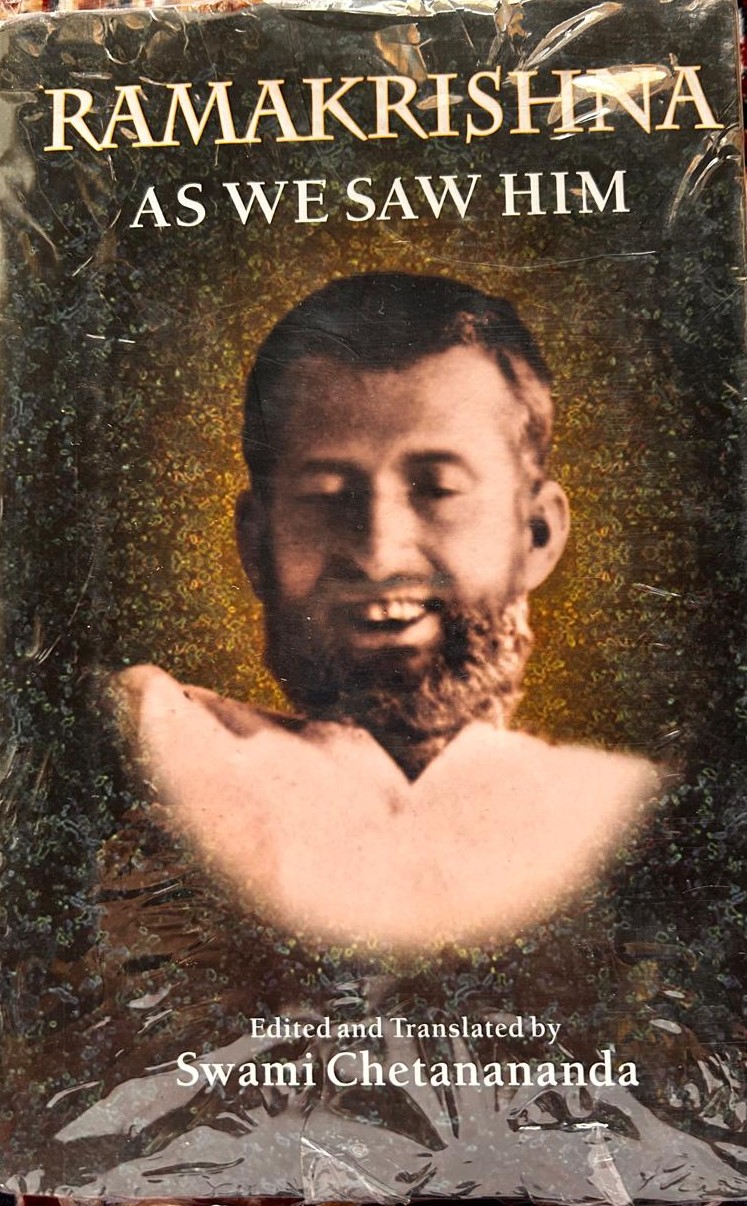
I’ve been reading Ramakrishna As We Saw Him, a remarkable collection of firsthand accounts — from Sarada Ma, from his niece Lakshmi Didi, from householder devotees, and from the sharp, skeptical young men of the Brahmo Samaj who once called themselves rationalists and atheists. It is not a book of miracles or metaphysics. It is a book of memory — people simply describing a man they watched closely, for years, at close range. And that closeness is what makes it so powerful.
Here is what stayed with me most.
An Almost Unbearable Devotion to Truth
We often talk about honesty as a virtue. Sri Ramakrishna treated it as something closer to a discipline of the body — something to be trained, tested, and never relaxed. The accounts in this book describe how seriously he took even the smallest untruth. There’s a well-known episode, recalled by more than one witness, where as a boy he refused to lie even to save himself from punishment, and this wasn’t a one-time act of stubbornness — it became a lifelong, almost obsessive commitment. He is remembered saying that if a person cannot be truthful in small, everyday matters, they have no right to speak of God at all.
He lived it, visibly, in front of people who were watching closely — educated young men trained to question religious figures. And they found nothing to question. His words and his life matched, every single time, and that is what slowly, quietly, won over their disbelief.
Austerity as a Daily, Unglamorous Practice
Austerity is physically hard. Sometimes it was even frightening to those around him. Devotees remember his indifference to comfort, his simple food, and his refusal to hold on to even small possessions. His spiritual practices were intense, and they visibly wore on his body. None of this was done for show. All these moments were witnessed by devotees or disciples, and he explained why — his longing for the Divine Mother was so intense that worldly comforts became insignificant to him. He also told his disciples that if they could do even one-sixteenth of what he practiced, they would be illuminated.
Continuous Striving — Never “Arriving”
Sri Ramakrishna put extreme emphasis on practice — on trying again, correcting, refining. He is remembered constantly testing his own spiritual states, questioning them, not settling into any one experience as final. Disciples recall him treating even profound realizations as a stage, not a destination — always pointing toward more.
This is such a strikingly modern idea. Excellence, in his framework, was never a certificate you earned once. It was a posture you held every single day. He expected the same restlessness-toward-growth from his disciples — not perfection, but honest, continuous effort.
The Teacher Who Asked “How Do You See Me?”
This is the detail I keep coming back to. Long before “360-degree feedback” became a corporate buzzword, Sri Ramakrishna — a barely literate priest at a temple in Dakshineswar — would ask his own disciples how they perceived him. Not as false modesty, but as genuine curiosity about his own blind spots.
He also insisted that his disciples never accept any sadhu or monk on reputation alone — they were instructed to test such a person rigorously, over time, day and night, before placing any trust in them. Imagine a spiritual teacher actively teaching his students to be skeptical of spiritual teachers, including, implicitly, himself. That is not the behavior of someone building a personality cult. That is the behavior of someone who wanted his disciples to find truth for themselves, not simply borrow his.
He taught largely through conversation — patient, repeated, often humorous — rather than command. The young rationalists from the Brahmo Samaj who arrived to challenge him didn’t leave converted by argument. They left convinced by consistency: a man whose private conduct matched his public teaching, tested again and again, who never once asked to be believed — only observed.
Teaching Each Disciple Differently
What makes this book so rich is how differently people remember being taught. Sri Ramakrishna never handed out one uniform lesson to everyone who came to him. He watched a person closely, understood where they stood — their temperament, their struggles, their readiness — and then gave them exactly what they needed, no more and no less. A handful of his sayings, recalled again and again by different devotees in this book, show this range beautifully.
Sri Ramakrishna’s movement is founded on the harmony of all spiritual paths, with Advaita Vedanta as the highest philosophical realization, but with equal respect for devotion, worship, and the spiritual practice best suited to each individual’s temperament.
“Be a devotee, but don’t be a fool.” This was his warning to people who confused blind faith with real spirituality. He had no patience for devotion that turned off a person’s good sense. Faith, he felt, should make the mind sharper, not weaker — a lesson meant for disciples who leaned toward superstition.
“One who curses another and holds on to grudges cannot attain liberation.” To those consumed by resentment or wounded pride, he offered this as a plain, almost blunt observation: a heart occupied with anger has no room left for anything higher. Liberation, in his teaching, wasn’t just a distant metaphysical state — it required an ordinary, daily cleanliness of the heart.
“Struggle a little, and the Guru will help you the rest of the way.” This was his answer to the disciple who felt overwhelmed, who thought spiritual life demanded superhuman effort before any grace could arrive. He reassured them that they weren’t meant to do it alone — but he was equally clear that some sincere effort had to come first. Grace met effort halfway; it didn’t replace it.
“Work with your hands, but keep your mind at the feet of the Lord.” For the householders in particular — people with jobs, families, and obligations who worried that a spiritual life was incompatible with worldly duty — this was liberating. He never asked them to abandon their responsibilities. He asked them to hold an inner anchor even while their hands stayed busy with the world.
Reading these side by side, you realize this wasn’t a man reciting fixed doctrine. He was, in every sense, a teacher reading his students — meeting the proud with humility, the fearful with reassurance, the superstitious with common sense, and the overburdened with permission to stay exactly where they were in life. That is what real teaching looks like, and it’s a large part of why people from such different walks of life — monks, skeptics, and householders alike — all felt he was speaking directly to them.
The Householders Saw a Different Man Entirely
The monastic disciples saw discipline and rigor. The householders — ordinary people with families, jobs, worries, and doubts — remember something else almost entirely: an overwhelming, unconditional compassion. He didn’t ask them to abandon their households or their duties to come close to him. He met them exactly where they were, and loved them without demanding they change first.
Their accounts in the book are some of the most moving — people who came once out of curiosity and found themselves permanently held in his care, regardless of how “spiritually accomplished” they were. His love simply did not have conditions attached to it. That, more than any teaching, is what pulled entire families into his circle and kept them there.
A Leader in the Truest Sense
Reading this book, I kept returning to one thought: Sri Ramakrishna was not only a spiritual guru. He was, in the fullest sense, a leader of people — someone who transformed atheists into devotees not through authority, but through relentless integrity, radical humility, and boundless compassion. He built no institution in his own lifetime, gave no formal instructions on organization, and yet the movement that grew out of those conversations by a riverside temple went on to shape the lives of millions.
That is not the legacy of a man who demanded belief. It is the legacy of a man who simply refused, every single day, to be anything other than exactly who he claimed to be.
Ramakrishna As We Saw Him doesn’t ask you to have faith in Sri Ramakrishna. It just asks you to watch him closely, through the eyes of people who did. And by the end, you understand why they never left.