The 2 Best Leadership Books for Managers Without Full Authority
The 2 Best Leadership Books for Managers Without Full Authority
By The Reading Room | Leadership
If you manage people but don’t technically run the company — if you take heat from your boss’s priorities on one side and your team’s frustrations on the other — you already know the feeling. You’re the filling in the org-chart sandwich. Not senior enough to set strategy. Not junior enough to just follow orders. Responsible for outcomes you didn’t fully choose, using authority you don’t fully have.
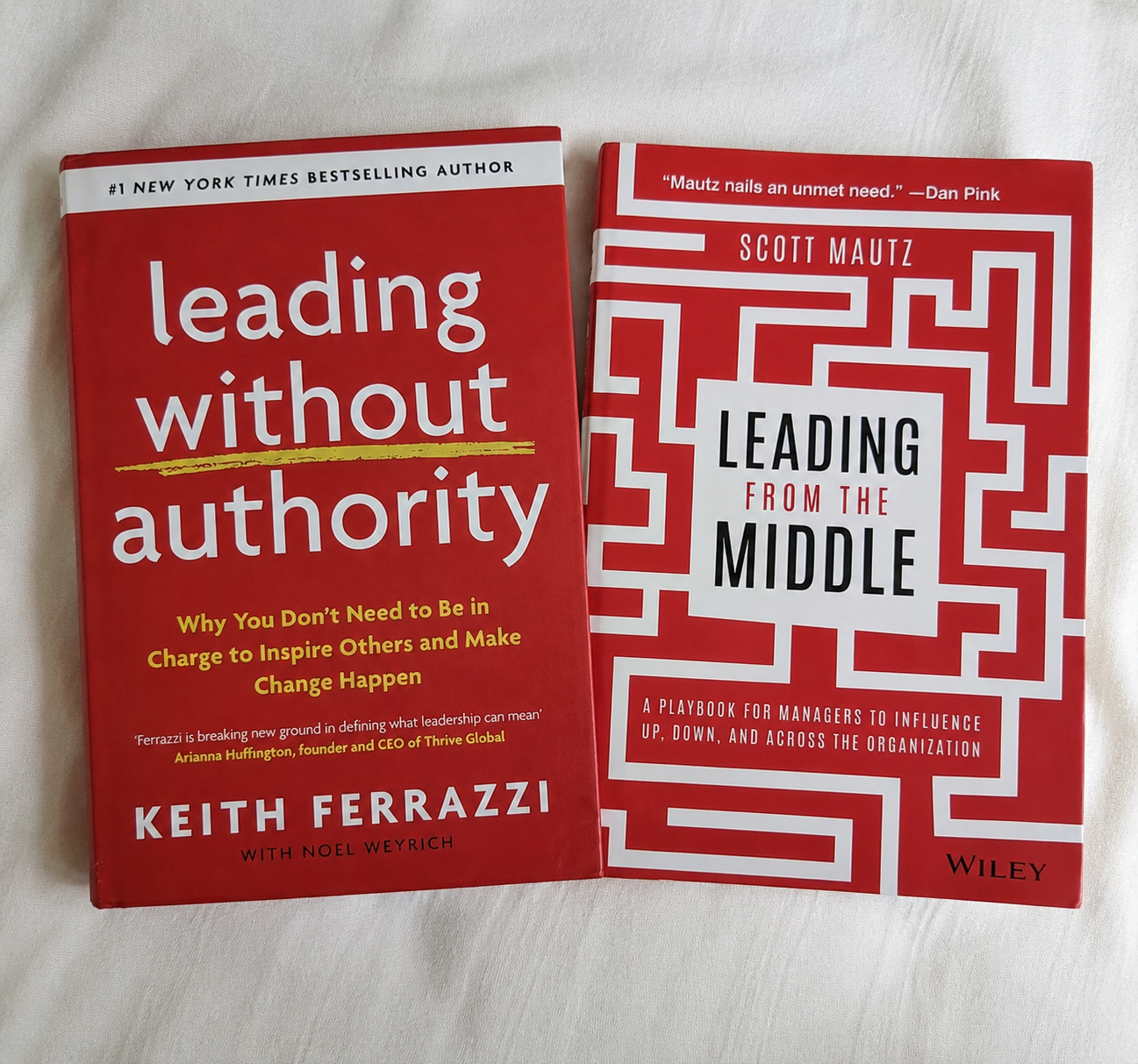
That’s the exact challenge this post is about: how to lead effectively as a manager without full authority. There’s a name for this job now, and thankfully, there’s also a growing shelf of books written specifically for it. Two of the best sit side by side on my desk: Leading Without Authority by Keith Ferrazzi and Leading from the Middle by Scott Mautz. Different authors, different angles, same core insight — the old command-and-control model of management was never built for people managing without the full weight of a title behind them, and it’s time to stop apologizing for that.
The Problem With “Middle” Management
Traditional leadership advice assumes you have positional power: budget authority, hiring and firing rights, a seat where decisions get made. Sandwich managers rarely have the full package. You’re expected to deliver results through people who report to someone else’s priorities too, influence peers who don’t report to you at all, and translate strategy downward while translating reality upward — often in the same meeting.
Both books start from this exact tension, but they solve it differently, which is what makes reading them together so useful.
Leading Without Authority: Influence as a Team Sport
Keith Ferrazzi, the New York Times bestselling author known for his work on relationship-driven success, argues that the future of leadership isn’t about climbing the hierarchy — it’s about building what he calls “co-elevating” teams. His core idea is that real influence today comes from candor, generosity, and radical collaboration, not from a title. Instead of managing down, you build a network of mutual accountability across silos, seniority levels, and even company lines.
For sandwich managers, this reframes the whole job. You stop thinking “I need permission to fix this” and start thinking “who else has a stake in this outcome, and how do I bring them in as partners rather than approvers?” It’s a shift from asking for authority to earning trust — one honest conversation and one small act of generosity at a time.
Leading from the Middle: A Playbook for the Squeeze
Scott Mautz’s book is more explicitly written for the exact position we’re describing. The subtitle says it plainly: a playbook for managers to influence up, down, and across the organization. Where Ferrazzi gives you a philosophy, Mautz gives you tactics — practical, structured advice for the specific daily friction of being caught between competing demands.
He treats “the middle” not as a limitation to escape but as a strategic vantage point. Middle managers see things neither the C-suite nor frontline employees see on their own — the gap between what leadership intends and what actually happens on the ground. Mautz’s playbook is about turning that unique visibility into real influence, whether you’re managing a skeptical boss, a disengaged direct report, or a peer who won’t return your emails.
Why Read Them Together
Ferrazzi will change how you think about power and relationships at work. Mautz will change what you do on a Tuesday afternoon when your boss wants one thing, your team wants another, and you’re the one who has to make it work anyway.
Together, they make a simple but liberating case: you don’t need a bigger title to be a real leader. You need better relationships, sharper communication, and the willingness to lead from wherever you’re standing — even if that spot is squarely in the middle.
Three Takeaways for Sandwich Managers
- Stop waiting for authority you don’t have. Influence is built through trust and candor, not org-chart position.
- Your middle-seat visibility is an asset, not a burden. You see connections others miss — use that as leverage, not just as a source of stress.
- Manage in three directions, on purpose. Up, down, and across all require different tactics — don’t default to only managing downward because that’s the only relationship with formal power attached.
If you’ve ever felt like your job title undersells how hard your job actually is, these two books are basically written for you. Read Ferrazzi for the mindset. Read Mautz for the moves. Use both to stop surviving the middle and start leading from it.