7 Books Every Indian Should Read This 80th Independence Day (And What They Say About India’s Future)
7 Books Every Indian Should Read This 80th Independence Day (And What They Say About India’s Future)
By The Reading Room | Independence Day
India marks its 80th Independence Day on August 15, 2026 — 79 years since 1947, and the 80th time the country has celebrated the day. As that milestone approaches, the conversation around India has quietly shifted. It’s no longer just about what India won in 1947. It’s about what India is becoming now: one of the fastest-growing large economies in the world, a nation of 1.4 billion people, and — if you believe a certain shelf of ambitious, argument-driven books — a genuine contender for global superpower status in this century.
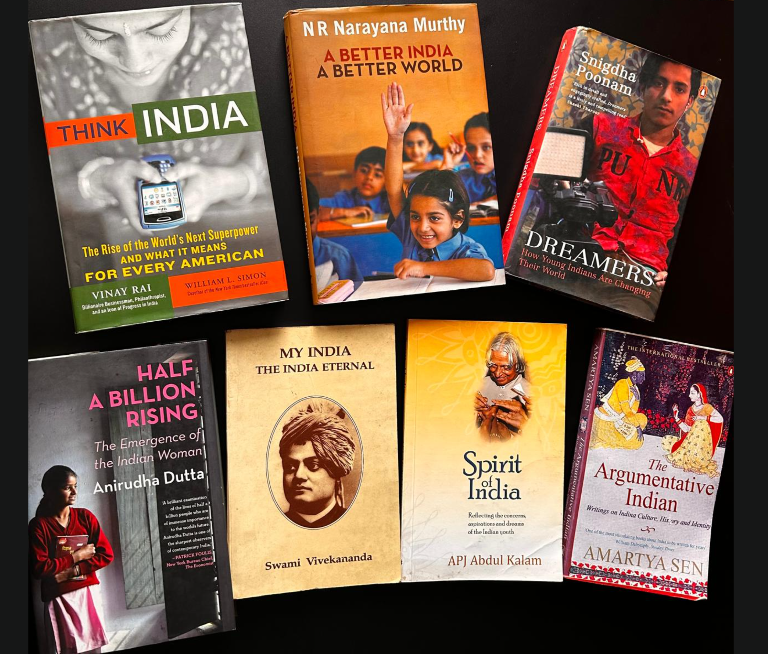
Seven books, written across more than a century by a monk, economists, scientists, industrialists, journalists, and outside observers, chart this arc in strikingly different ways. Read together, they form less a single narrative and more a debate — about identity, growth, gender, youth, and whether “superpower” is even the right word for what India is trying to become. Here’s what each of them adds to that conversation, and why they’re worth revisiting this Independence Day.
Civilizational Roots
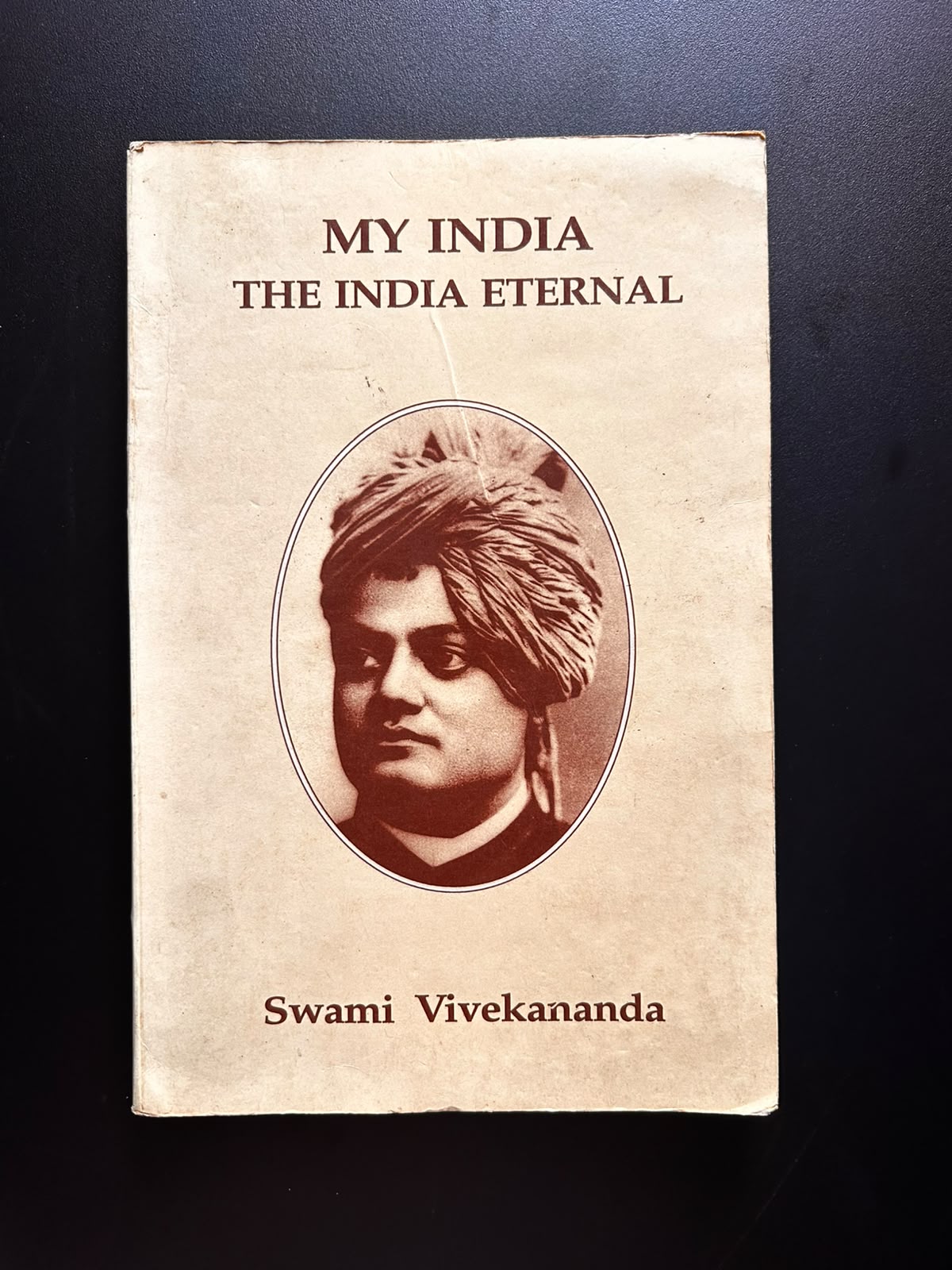
My India, The India Eternal
Swami Vivekananda
Swami Vivekananda’s love and confidence in India’s future were well known. He believed his beloved nation would rise again and show the way to the rest of the world. This book collects his speeches and writings about his homeland. It isn’t political — it’s a love letter. One of his students, Sister Christine, once said that just hearing him say the word “India” was enough to feel his love and pride for the country.
But this wasn’t just emotion. Vivekananda believed India had something real to offer the world — its ancient wisdom and spiritual traditions. Reading him today, after independence and economic growth, is a good reminder: the idea that India is “great” didn’t start with GDP numbers or superpower talk. It started with a monk’s belief that India’s deep culture and spirit were its true strength — the root that every other book on this list quietly grows from.
Democracy & Pluralism
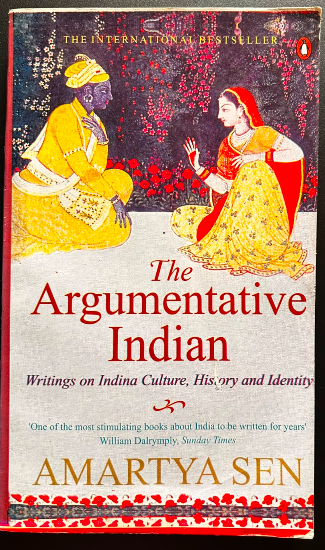
The Argumentative Indian
Amartya Sen
Nobel laureate Amartya Sen’s collection of essays doesn’t talk about GDP forecasts or manufacturing hubs. Instead, it makes a quieter, more foundational argument: that India’s real strength has always been its culture of dialogue, dissent, and debate — a tradition Sen traces back through centuries of philosophy, religion, and public reasoning, long before “democracy” was a borrowed Western word.
Sen’s core claim is that India’s pluralism and its habit of argument are the infrastructure — the reason a country this diverse in language, religion, and caste has held together as one democratic experiment for over seven decades. Any conversation about India becoming a superpower, Sen implicitly warns, has to reckon with whether that argumentative, plural identity survives the process — or gets flattened by it.
Individual Responsibility
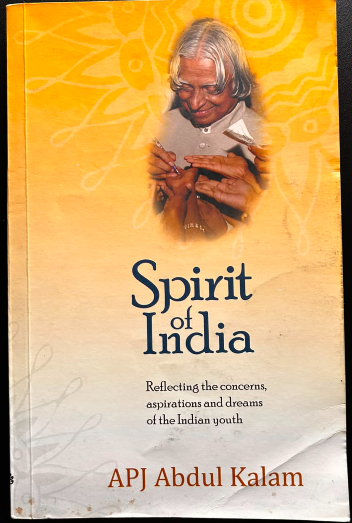
Spirit of India
A.P.J. Abdul Kalam
Where Sen writes as a philosopher, Dr. Kalam writes as India’s most beloved public servant, drawing on questions put to him by students and citizens during and after his presidency. Spirit of India is structured as a kind of dialogue — young India asking, and Kalam answering with the same blend of scientific rigor and moral clarity that made him “the People’s President.”
The book’s central worry is one that still feels current: that the nationalism forged in the freedom struggle has weakened, even as India needs a second independence movement — this time against poverty, inequality, and division — to become a developed nation. Kalam’s answer isn’t policy; it’s individual responsibility. His famous conviction, echoed throughout the book, is that a nation only rises when every citizen decides to rise with it. For a superpower narrative that so often gets told in terms of GDP and defense budgets, Kalam’s insistence on the individual as the real unit of national strength is a necessary corrective.
Institutions & Governance
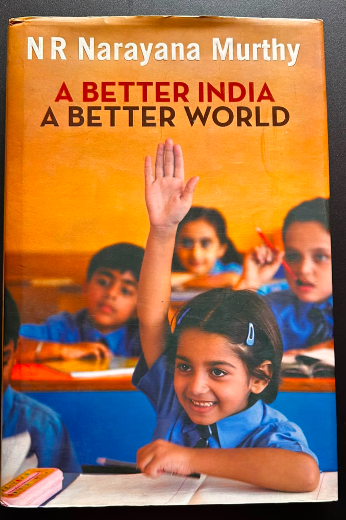
A Better India, A Better World
N.R. Narayana Murthy
If Kalam is the moral voice, Infosys co-founder N.R. Narayana Murthy is the practitioner’s voice. Written by the man who helped build India’s IT industry from near-scratch, this collection of speeches and essays reads like a founder’s manual for nation-building — corporate governance, education reform, meritocracy, and the compounding value of trust in institutions.
Murthy’s central thesis is uncomfortable but important: India’s economic potential is real, but it is consistently undercut by weak public institutions, inconsistent governance, and a gap between India’s talent and its infrastructure. His superpower story isn’t triumphant — it’s conditional. India can be a better India and, by extension, contribute to a better world, but only if it fixes the unglamorous things: contract enforcement, public education, healthcare delivery, urban infrastructure. It’s a useful counterweight to any Independence Day narrative that risks becoming self-congratulatory.
Youth & Ambition
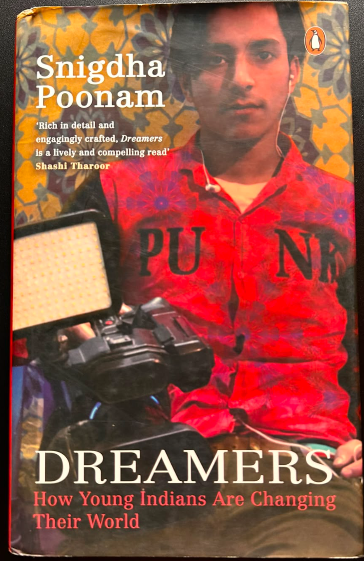
Dreamers
Snigdha Poonam
Journalist Snigdha Poonam takes the superpower conversation out of boardrooms and think tanks and drops it into small-town India — the tier-2 and tier-3 towns where the country’s median-age-27 population is coming of age with smartphones, English-speaking coaching centers, and enormous, sometimes reckless ambition. Dreamers follows real young people chasing fame, wealth, and escape through hustle-culture startups, exam-cracking obsession, clickbait journalism, and even scams.
It’s the most unromantic book on this list — and arguably the most necessary one. Poonam’s reporting suggests that India’s demographic dividend, so often cited as the engine of its rise, is not a guaranteed asset. It’s a volatile, restless force that could just as easily produce disillusionment and radicalization as it produces engineers and entrepreneurs. If India is going to be powered by its youth, this book asks: powered toward what, exactly?
Women’s Emergence
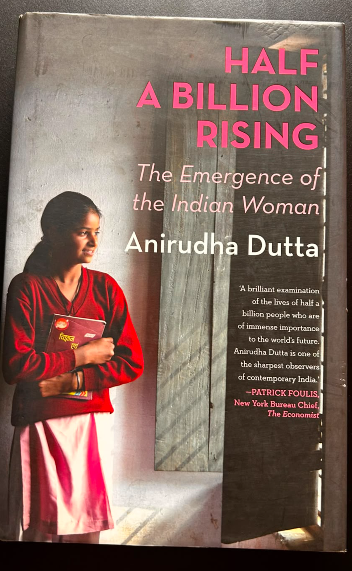
Half a Billion Rising
Anirudha Dutta
Subtitled The Emergence of the Indian Woman, Dutta’s book turns to the other half of India’s demographic story — the roughly half a billion women whose economic and social emergence, he argues, is one of the most consequential shifts happening in the country today. Traveling from small towns like Forbesganj and Munger to Mumbai and Delhi, Dutta collects the stories of girls and women negotiating education, employment, and independence against family expectation and social resistance.
The book resists easy optimism. It asks hard questions — is change happening because of the system or despite it? Is rising visibility for women also provoking rising backlash? — without pretending to have neat answers. But its underlying claim is unambiguous: no version of “India as superpower” is credible if it only counts half the population. Dutta’s book insists that women’s economic emergence isn’t a side story to India’s rise — it is the story.
Global Perception
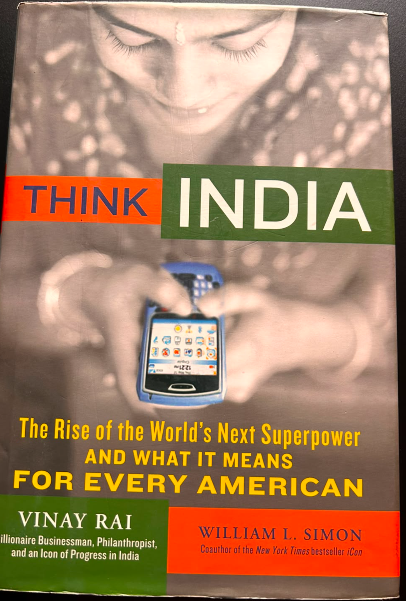
Think India
Vinay Rai & William L. Simon
The most explicitly “superpower” book on this list, Think India: The Rise of the World’s Next Superpower and What It Means for Every American was written for an outside audience — American business leaders and policymakers who needed to understand why India mattered. Businessman Vinay Rai and bestselling author William L. Simon lay out the macro case: a young workforce, a fast-growing free-market economy, deepening trade and defense ties with the United States, and a democratic system that — unlike some of its rivals — gives it long-term legitimacy on the world stage.
Rai and Simon ask what kind of power India is becoming, and why the rest of the world should pay attention. Unlike the other books on this list, which mostly turn inward and ask hard questions of India itself, this one makes a clear, outward-facing prediction: that the world needs to take India seriously, starting now.
Reading them together
Line these seven books up chronologically by theme rather than publication date, and a shape emerges. Vivekananda gives India its founding devotion — the conviction, articulated decades before independence, that the country’s civilizational depth is itself a source of strength. Sen gives India its founding idea for the democratic era — pluralism as strength. Kalam gives it a moral mandate — individual responsibility as the engine of collective progress. Murthy gives it an institutional to-do list. Poonam and Dutta give it its two largest, least predictable forces — restless youth and rising women — neither of which can be assumed to automatically serve the national project. And Rai and Simon give it the outside world’s verdict: that despite all these open questions, India’s rise is already being priced in by the rest of the planet.
That’s perhaps the most honest way to think about India’s “superpower movement” on its 80th Independence Day — not as a finished achievement to celebrate, but as an argument still being had, between the devoted and the institution-builders, between the confident and the cautious, in exactly the argumentative spirit Amartya Sen described.
Jai Hind.