International Literacy Day 2026 in the Age of AI
International Literacy Day 2026 in the Age of AI
By The Reading Room / AI & Technology
International Literacy Day, 8th September
There is a man who delivers packages in your city. He never misses an address, even the confusing ones tucked behind three turns and a shuttered shop. He replies to customers on WhatsApp with the right emojis at the right moments. He sends voice notes that are warm, clear, funny. He watches videos, follows a cricket match live, argues in the comments section, and somehow always finds his way back home on an app that is, on paper, built entirely out of text.
Ask him to read the name printed on his own delivery slip, though, and he will hesitate. Ask him to write a two-line note to his son’s school, and he will ask someone else to do it for him.
He is, by the oldest definition we have, illiterate. And yet by every visible measure of “keeping up” in this world, he seems to be doing just fine.
What literacy actually means
At its simplest, literacy has always meant one thing: the ability to read and write. Not just to recognise letters, but to turn thought into text and text back into thought — to take a stranger’s words off a page and rebuild their meaning inside your own head, and to do the reverse when you write.
For most of human history, that single skill decided almost everything else. Who could read a contract before signing it. Who could write a petition. Who could follow a recipe, a manual, a law, a prayer. Literacy was the gate, and everything else in a person’s life stood on the other side of it.
The mobile-age paradox
Then came the phone — cheap, touchscreen, voice-enabled — and something strange happened. The gate didn’t disappear, but it grew a side door.
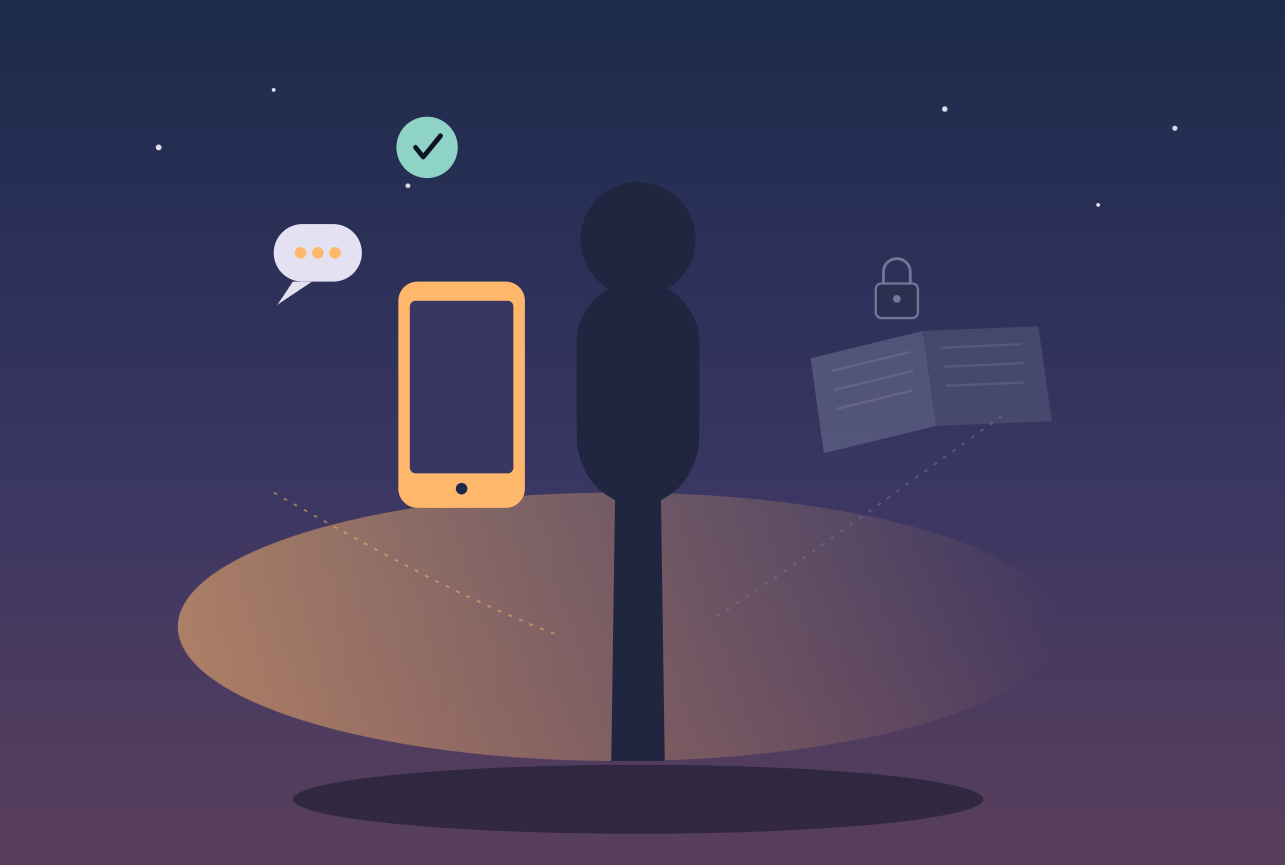
A person who cannot read a single sentence can now open an app by recognising an icon’s shape and colour, not its label. He can dictate a message instead of typing it, and hear a reply read aloud instead of reading it. He can watch a tutorial instead of reading instructions, tap a photo instead of filling a form, and send a thumbs-up instead of writing “okay.” Artificial intelligence has quietly extended this side door even further — voice assistants, auto-translated speech, image recognition — so that entire days can now pass in which a non-literate person interacts fluently with the written world without ever actually reading or writing a word of it.
This is, in one sense, a genuine gift. It has pulled millions of people into commerce, communication and information who were once locked out entirely. A grandmother in a village can now video-call her migrant son. A street vendor can accept digital payments he cannot itemise on paper. A daily-wage worker can navigate a city of strangers using a map he cannot read the street names on.
But it is worth asking the question the convenience tends to hide: if his daily life runs this smoothly without reading and writing, what exactly is he missing?
What technology cannot substitute
Because something is still missing. Voice notes and tap-to-navigate maps solve the problem of getting through the day. They do very little for the things that decide the shape of a life.
He cannot verify anything for himself. He receives information — a forwarded voice note, a rumour, a scheme, a scam — and has no independent way to check it against a written source. Someone else always has to read it for him first, and he has no way of knowing if they read it correctly or honestly.
He cannot protect his own interests on paper. A loan agreement, a rental contract, a legal notice, a medical prescription — these still arrive as text, and always will. He signs with a thumbprint on documents whose contents he has to trust someone else’s word for. The convenience of voice ends exactly where consequence begins.
He cannot build formal, transferable knowledge. Watching a video teaches him to repeat a task. It does not teach him to reason through a problem he has never seen before, the way working through a written explanation does. Reading trains a kind of patient, structured thinking that scrolling and listening simply don’t ask of the brain.
He stays dependent, not independent. Every form, every application, every government scheme meant to help him still needs someone literate standing beside him to fill it in. His technological fluency is real, but it is borrowed fluency — it works only within the narrow paths that apps have pre-built for him. Step outside those paths, into anything unscripted, and he is stuck again.
And the gap becomes hereditary. He cannot sit with his child’s homework. He cannot read a bedtime story. He cannot check whether the child is actually learning at school or simply attending it. Without meaning to, he risks handing the same invisible wall down to the next generation, just dressed in a newer phone.
Why this still matters, sixty years on
This year marks the 60th anniversary of International Literacy Day, and UNESCO has framed its 2026 theme as “Literacy for people, the planet and prosperity” — a deliberate reminder that reading and writing are not a nostalgic school-day skill but the foundation underneath inclusion, opportunity and dignity. And the scale of the problem has not shrunk with the rise of smartphones: UNESCO estimates that at least 739 million young people and adults still lack basic literacy skills, even in an age when a majority of them likely own, or have access to, a mobile phone.
That single fact should unsettle the easy comfort of “technology is solving illiteracy.” It isn’t. It is doing something quieter and more complicated — it is hiding illiteracy, making it easier to live around without ever living past it.
The point of the day
International Literacy Day was never meant to just celebrate readers. It was meant to ask, every year, who still cannot read — and now, in 2026, it must ask a sharper question too: who has learned to look literate through a screen, while remaining unable to read the world for themselves?
The delivery man will keep sending his perfect voice notes. He will keep finding every address. But somewhere in that smooth, technology-assisted day, there is still a locked door — to contracts he cannot check, to knowledge he cannot build alone, to a child’s homework he cannot sit beside. Literacy Day exists to say that door still matters, and that a phone in the hand is not the same as a pen in it.